Tuesday, July 12, 2011

Saucony: Building Loyalty without a Loyalty Program.


Saucony is a mid-sized running shoe company that’s battling for customers with athletic gear giants like Nike, Reebok and Adidas. So how do they compete? By making an emotional connection with first-time buyers, and then introducing them to an online community that helps turn them into loyal customers.

Now, no one develops a loyal customer base without having a great product—and Saucony does. Their constantly evolving product line generates consistently strong reviews from customer influencers like Runners World magazine. But what really sets Saucony apart, is its engaging and inventive advertising, specifically its Web and social media presence.

Last month I wrote that the key to a great social media campaign is a big idea—and Saucony has one that starts with its general ad campaign, and is then layered into its Web and social media efforts. The campaign theme is “What is Strong” and in TV and Web spots, runners are challenged to define what strong means to them and encouraged to “Find Your Strong”.

The “strong” theme is featured prominently throughout the Saucony Web site. Runners are invited to “Create & Share Your Personal Strong” by entering the things that make them strong, including how they train and what inspires them. You can then share these thoughts via the Web site, Facebook or Twitter—and even have your strong statements made into a T-shirt.

Coolest of all, is the campaign’s interactive online gallery. You can choose to participate in, or just view, a clever and well-designed series of word portraits that show how other runners have answered the query “This is My Strong”. Call-outs include things like “6am Run”, “My Mom” and “My City-New Orleans”.

As expected, the Sacuony Web site is chock full of pages on the latest running shoes and apparel, as well as the technology behind it. But what’s compelling and differentiating here is the online community, where runners can gain inspiration from both elite and everyday runners.

The writing is great throughout, as well. For instance, the Community page greets you with language that runners (like me) just eat up: We all share a common love of running. A common pride in personal bests. A common disdain for potholes and cramping. A common interest in other runners. Welcome, runners all.

Great job, Saucony. And while I must admit to being a long-time Nike loyalist, I’ll be taking a very close look at Saucony the next time I go shoe shopping.

This post originally appeared on Loyalty Truth and was written by writer and creative director Tom Rapsas.

Monday, June 13, 2011

Your Social Media Strategy Needs Some Big Ideas.


I borrowed the headline above from a recent B-to-B article by Jeff Ernst, a principal analyst at Forrester Research. I think it perfectly underscores something I’ve been saying for a while now: It’s about the power of the idea, not the tactic. (My colleague, loyalty expert Bill Hanifin, has a similar mantra: Technology enables. Imagination wins.)

While most companies are now testing the social media waters with a presence on Facebook and Twitter, it’s best to have a strategic plan of attack before diving in. In the words of Ernst, “Starting with tools and tactics spells disaster. You need to start by understanding the social behaviors of your target audience and defining the big ideas that will attract and engage them.” But before discussing big ideas in social marketing…

First things first: you’ve got to show up.

To paraphrase Woody Allen, “90% of social marketing is just showing up”, and by that I mean being active on whatever social media tool you’re using. That means starting conversations, answering queries, and when necessary, defending your company or brand. To do this, you’ve got to set aside a small portion of your day to social media activities. (For me, its 20 minutes each morning.)

Next step: you need a big idea.

What’s a little more challenging is the next 10% of the equation—coming up with the big ideas that give your customers something to talk about. As Jillian Ney pointed out in a recent post on Social Media Today, “The motivation has been to collect fans and followers, which have resulted in many branded social spaces not actually providing any entertainment or value.”

In many ways, a great social media campaign has much in common with a great traditional ad campaign—the best ones are centered around a big idea. To achieve “big” status, your idea needs to have the power to inform, entertain and/or engage your customers, while getting them to take a desired action, whether it’s signing up for e-mail, retweeting a message or checking in with you on Foursquare.

Here are three social media ideas that I think work hard for their brands.

Why? They go beyond simply blasting messages into the social media space, and actually get people to interact with the brand. They also leverage ideas that are natural tie-ins to the image and essence of the brands being promoted.

Paula Deen and “the real women of Philadelphia. A promotion for Philadelphia Cream Cheese, it invites customers to submit original recipes using Philadelphia brand products, with 16 finalists selected to join celebrity chef Deen in a live “Cook Off” where four grand prize winners will be chosen. While I’m not a big fan of celebrity endorsements, this one feels like a natural, since it’s easy to imagine the down-home Deen actually using Philadelphia Cream Cheese in her recipes. Importantly, the site has done a nice job of putting Paula’s ebullient personality to use through online videos and social media like a “live chat” on Twitter.

Coleman, “the original social networking site”. Coleman, the camping gear company, has done a great job of tying their brand into social networking, starting with their clever “original networking site” positioning. A Facebook page promotes their easy-to-build tents with a “Summer Time in no Time” giveaway. There’s a Twitter page that could be a little more active, but does address the occasional customer query, plus a YouTube channel and Twitter app that fittingly let you check out “creepy campfire stories”.

Fair Tweets from Ben & Jerry’s. Another big idea comes from ice-cream maker Ben & Jerry’s. We think of Ben & Jerry’s as a very socially conscious brand and they prove it with Fair Tweets, which uses Twitter in a way I haven’t seen before to promote Fair Trade, a global organization that works to get better deals for farmers. It works like this: You go to the Ben & Jerry’s Fair Tweet page, and being typing in a tweet. The site then “puts your unused Twitter characters to use”, by turning any leftover characters (from your 140 character cap) into a message about Fair Trade. 33 characters left? A 33-character message is tacked on to the end of your tweet. Very cool and an ingenious way to spread a public service message.

How about you. Have you seen or worked on any big social media ideas lately?

Friday, May 20, 2011

Atlantic City, Trump and a Casino Down on its Luck


A couple of years ago, I wrote a post about Atlantic City and its prolonged losing streak—and I’m sorry to report, things aren’t looking a whole lot better today. After a rocky 2009, revenues in AC fell again in 2010 by nearly 10%. And forecasters say that 2011 could be even worse.

In an attempt to rejuvenate the fading gambling mecca, NJ governor Chris Christie, citing the “complete incompetence and corruption in Atlantic City”, recently pushed through legislation that makes him the city’s de facto mayor. (Which led actual Atlantic City mayor Lorenzo Langford to complain “the state is treating Atlantic City like a pimp treats a prostitute.”)

One of Christie’s first moves was to spearhead the formation of an Atlantic City tourism district, which covers a large portion of the resort city. The state will take over responsibility for public safety, cleanliness and business development. Not a bad idea, given the seamy vibe that permeates AC once you set foot outside a casino.

With that backdrop, let me tell you about a recent trip I made to the Trump Marina casino and hotel.

First thing you should know about Trump Marina is that US billionaire Donald Trump is nowhere to be found. A few years ago, the three Trump casinos in Atlantic City were about to go broke, and he sold off all but 10% of the properties. So it’s really Trump in name only—and at Trump Marina, soon even that will be gone. Houston-based Landry’s Restaurants, owners of the Golden Nugget in Vegas, are buying the casino and will reportedly rebrand it with the Golden Nugget name.

My trip to the casino occurred during a recent boys’ night out to attend the Atlantic City Beer Fest, followed by some obligatory late night gambling. With my trusty Trump One player’s club loyalty card in hand, I hit the casino floor late on a Friday night into Saturday morning. The place was half-dead and I mean that literally, as half the casino floor was shut down due to a lack of business.

It’s not a bad place, actually a welcome break from the more glitzy and more crowded Borgata—and it wasn’t a bad night either, which for me means I walked out with the same amount of money I walked in with, while enjoying a few cold beverages on the house. (My buddy Jim fared a bit better clearing over $400 from a four-hour session at the poker tables.)

Now, I don’t expect much from my Trump One loyalty card while I’m at the place—I’m a lower tier member—but I do expect a little recognition and better customer experience when I go to the Web site, which I did a few days later to make sure my playing was being tracked. It was, but I felt a little less than welcome.

A few notes on my Web experience:

• I had trouble remembering my password—I had selected it late one night with a code word that probably made sense at the time, but was now totally lost to me. I sent a message asking for help, but received a canned e-mail reply telling me the only way I could retrieve my password was to go to the casino. No password reset function. No one to call.

• After 50 or so tries, I did remember the password to my Trump One account—let me tell you, it was pretty obscure—only to find little relevant information for me on the site. I click to view my “Statement”—it’s not there, I need to call to get the info. I click on “Rooms” and a blank screen appears.

• Even if I hadn’t hit the threshold to receive an offer or room reward, the site needs to engage me. Give me a few dollars off on my next stay. Offer me a free app if I eat at the restaurant. Tell me you can’t wait for me to come back. Show me some love!

But it looks like I’ll have to wait for the new regime to get some personalized attention. A NY-based management company is now running the Trump casinos, and according to a company exec quoted in the press, they’re “focused on cutting costs, including marketing programs that were deemed to be too expensive…we were over-incentivizing our customers…it was not a sustainable model.”

Granted the house needs to make money, but cutting back on “incentivizing our customers” seems like the wrong way to go about it—and a good way to lose an ever decreasing pool of loyal customers that is opting to go to the more glamorous Borgata—or other, newer casinos that have popped up in Philly, Delaware and New York.

But my guess is now that the Trump Marina has been sold, the caretakers have packed their bags and are waiting for the new owners to arrive so they can turn over the keys. Soon the Trump Marina will be history—and the Golden Nugget will take its place.

It’ll be interesting to see if they bring new vim and vigor in the attempt to attract—and more importantly, retain—customers.

This post, by Tom Rapsas, originally appeared on Loyalty Truth, May 11, 2011.

Wednesday, May 4, 2011

Should Loyalty Redefined sell out?


I’m looking forward to seeing the new Morgan Spurlock movie Pom Wonderful® Presents: The Greatest Movie Ever Sold. Unfamiliar with Spurlock? He’s the raconteur behind the funny but frightening documentary Super Size Me, in which the protagonist ate nothing but McDonald’s fast food for a month—which caused him to become fat and physically ill.

This time out Spurlock demonstrates the ubiquity of branding messages in our lives, by literally selling out his new movie. In a series of filmed encounters, Spurlock urges brands to sponsor his movie for a price—and is able to entirely fund the film through product placement and sponsorships, including a cool $1 million from pomegranate juice maker Pom for a spot in the title.

This got me thinking: maybe Loyalty Redefined proprietor Upendra Namburi should sell out this blog site. With so many loyalty programs out there, the possibilities are limitless. Consider: Loyalty Redefined sponsored by Hyatt Gold Passport or American AAdvantage presents Loyalty Redefined or how about i-mint, Loyalty Redefined & You.

After all, we’ve sold out our sports stadiums—from Pizza Hut Park, home of US Major Soccer League’s FC Dallas to the silly KitKat Crescent, home ground of England footballers’ York City, to Easy Credit Stadium, the ridiculous sounding home of German pro soccer team FC Nürnberg.

What’s more, we’re now advertising in virtually every space known to man. This includes the walls and stalls of bathrooms, corporate logo tattoos that turn people into walking advertisements (in one case, for a 20% discount for life), and the latest innovation in advertising space sales—entire homes turned into billboards.

With that backdrop, why shouldn’t Loyalty Redefined sell out as well? I hereby declare myself Updendra’s agent. Bidding starts at US $100K. Any takers?

Creative Director and writer of this post, Tom Rapsas, will be accepting offers at tomrapsas@gmail.com

Friday, April 8, 2011

Did Social Media cost Pepsi the #2 Soft Drink Spot?


It was recently reported in the trade press that Pepsi had slipped to the #3 soft drink in U.S. sales, behind Coke and new #2 Diet Coke. But most interesting was the speculation behind the drop. In an Ad Age article titled “How Pepsi Blinked, Fell Behind Diet Coke”, it was hinted that Pepsi had put too many of its marketing eggs in the social media basket.

Some background: In 2010, the company launched the Pepsi Refresh Project. As I reported in a previous post: This Web-based initiative asks customers to submit ideas that they think will have a positive impact on the world, including everything from building community playgrounds to caring for wild cats. Consumers vote on ideas they think should be funded, and to date Pepsi has committed over $15 million to nearly 400 winning ideas.

The Refresh Project was backed by a big social media presence and its launch coincided with Pepsi’s move away from traditional advertising channels, including an ad boycott of the Super Bowl and other major marketing events. (By comparison, Coke is ubiquitous, sponsoring everything from the NCAA tourney to NASCAR to the hit TV show American Idol.)

In the Ad Age article, John Sicher, editor and publisher of Beverage Digest, expressed his concern about Pepsi’s marketing efforts saying, "In the cola wars, the Refresh Project by itself isn't enough to market Pepsi's cola brands." Sicher believes that in addition to Refresh, the company needs “more product-oriented advertising and marketing. I think that the 2010 results are probably a wake-up call for Pepsi."

In an Ad Age editorial, Rance Crain chimed in "there's also the danger that consumers could conceivably tire of causes or decide that Pepsi, a marketer long known for its ability to amuse and entertain, is taking itself too seriously. After all, we're talking about fizzy soda water here."

Julie Rohem, the ex-marketing chief of Wal-Mart, also expressed her doubts about Refresh in a recent blog post: “the message had nearly nothing to do with the product or the sale of that product. It was altruistic and admirable but it did not engage people with the drink itself—only the endeavors that the campaign supported. Pepsi at the end of the day is a mass brand and that means appealing to the masses on the product first.”

So was the Pepsi Refresh Project a mistake? A qualified yes—if the company really thought it could abandon its more traditional advertising efforts for one that pitched good vibes instead of good taste. A message of corporate benevolence is all well and good, but it feels like the company forgot the primary goal of any marketing department: move the product.

That said, Pepsi should also be commended for doing something a lot of bottom line-focused companies have ignored in recent years—giving back to the community. Handing cash to initiatives like “supporting the rescue and care of injured and orphaned wildlife ” and “getting the lowest income students in our community into college” is truly a noble endeavor.

It’s enough to make this bleeding-heart chug a cold bottle of Pepsi or two. If only I drank cola.

This post by Tom Rapsas originally appeared on Loyalty Truth, March 31, 2011.

Monday, March 21, 2011

Advertising is Changing. Are You Changing With It?


The customer has escaped. We can no longer control the process of how and where they get information. ~Marjorie Kalter

There’s a sea change taking place in the way we communicate with customers, and these changes are rewriting the definition of advertising as we know it. In fact, I believe that as marketers we now two choices: swim with the tide or have the new communications wave roll over us.

The truth is that the effectiveness of old-fashioned “push” advertising, whether it’s a TV spot, print ad or e-mail, is waning. More and more customers, especially in the under-40 demographics, are ignoring traditional advertising altogether, and turning exclusively to the Web and social networking tools for product and service information and recommendations.

Some have labeled this change “Advertising 2.0”, but one of the movement’s philosophical godfathers, Edward Boches, simply calls it “the evolution of advertising”. Boches is the long-time creative leader at Boston-based ad agency Mullen, which in the past couple of years has transformed itself from a traditional ad agency into “a firm that blends digital, social, media, creative, mobile and direct response”.

I’ve been looking at some recent slide presentations and blog posts from Boches, and he has a number of compelling insights about the changes taking place in the industry. Here are a few choice ones:
• Customers don’t want to watch and read and consume. They want to participate, share and respond.

• Once we were in the business of telling stories. Now we are in the business of getting others to tell stories for us.

• User experience and engagement are the new art and copy.

Boches also sees changes in the future of traditional advertising, believing that as brands become less dependent on advertising and messages, they will focus on ways to become more relevant and useful. Think of it as advertising that does less selling and more connecting.

A prime example currently in the marketplace is the Pepsi Refresh Project. This Web-based initiative asks customers to submit ideas that they think will have a positive impact on the world, including everything from building community playgrounds to caring for wild cats. Consumers vote on ideas they think should be funded, and to date Pepsi has committed over $15 million to nearly 400 winning ideas. Does the site sell Pepsi? I suppose so, but in a very indirect way.

Will this advertising change effect loyalty marketing? It already is.

In loyalty marketing, it’s time to think about going beyond the everyday communications of postcards, e-mail and statement inserts. It’s time for a full-throttled commitment to an idea I first began talking about in 2002: starting a dialog with customers. (Not that I can take credit for the concept, it was the brainchild of Frequency Marketing’s visionary founder Rick Barlow.)

This means communicating with your customer base when and where it works best for them, via the social media channels where they congregate—which these days is sure to include Facebook and Twitter, and possibly Foursquare. It also means opening up the lines of communication via your company Web site and blog.

There are also marketing opportunities galore in leveraging your current customer base, by giving them perks that encourage them to spread the good word about your product or service. For instance, when US-based restaurant chain P.F. Chang’s introduced its Home Menu frozen meals to grocery stores, its first communications target was the brand’s loyal customers.

P.F. Chang’s selected members of its loyalty program and customers engaged in the brand’s social media channels (Facebook and Twitter) and asked these fans to raise their hands and tell why they loved the brand so much. Those who participated in spreading word of mouth were entered into a sweepstakes to win one of 50 home dinners for two, complete with custom table settings.

The bottom line is that, like it or not, the way we communicate with customers is changing. The question is, are your clients or your company changing with them?

This post originally appeared on Loyalty Truth, March 16, 2011, and is by Tom Rapsas. Tom is a creative director and writer and can be reached at tomrapsas@gmail.com.

Monday, February 28, 2011

Borders and the Long Good-Bye.


By now, you may have heard about the big financial mess that the US-based Borders book store chain is in. They recently filed for Chapter 11 bankruptcy and it’s hard not to see the whole situation winding up in a very bad place--sooner rather than later.

The Borders predicament is emblematic of a continuing shift in the way we purchase goods and services in the digital age. The canary in the coal mine were the travel agents, who saw themselves squeezed out of existence once consumers figured out they could just as easily make travel plans on their own.

The next domino was the music business, and with the advent of Amazon and e- books, now the book industry. Even though Borders has a nifty Web site, they unfortunately entered the digital game very late—and as the demand for physical books shrinks, you sure as heck won’t be making a trip to the mall to buy an e-book.

It appears that Borders will go down fighting. As a member of the Borders Rewards program, I received an e-mail from Mike Edwards, the President and CEO of Borders, Inc. It was well-crafted and heartfelt, and included the following passages:

As Borders moves forward, our commitment to you is to be a best-in-class bookseller—whether it’s our stores or Borders.com—where you can purchase books and related products that stimulate and satisfy your reading interests.

Over the next several months, we will build on our core strengths as a great bookseller with the goal of emerging as the destination of choice for the millions of customers who shop our stores each year.

Sorry, but I’m not buying it. And the fact I’m not buying it leaves me feeling a little sad, as I think Borders was a good chain with some cool stores that I at one time visited frequently. I’m also left wondering which vertical will be impacted next.

This post is by Tom Rapsas and originally appeared on Loyalty Truth. Tom is a writer, creative director and strategist. He can be reached via Twitter @tomrapsas or at tomrapsas@gmail.com.

Friday, February 4, 2011

The Death of Loyalty Rewards As We Know Them?


I’m sensing a tipping point in how customers relate to loyalty program rewards, and my thinking goes like this: when customers choose which company to do business with, rewards just don’t matter like they used to.

My take is that the classic loyalty reward scheme—earning points toward “hard” rewards for repeatedly doing business with a company—has been trumped by the customer experience. In other words, today’s customer is more likely to opt for a better experience today, than accept a lesser experience that pays dividends down the road.

Lets start with a personal example. I recently cleaned out my wallet of old business and program membership cards. There, I found reward cards for both Borders and Barnes & Noble. Now, I know I have points in both of these programs, but I haven’t engaged with either brand for years. Why? I’ve given all my business to Amazon, which for me offers a better customer experience.

A recent blog by marketing guru Seth Godin points anecdotally to a similar trend toward “experience over rewards” happening in the airline industry. Godin believes that the greater the risk involved with getting a reward—one we have to save for and may never use—the less we value it. He writes:

Frequent flyer miles, for example, began with the promise that if you flew an airline regularly for months (or even years) you'd get a free flight. The airlines oversold the miles and undelivered on the free flights, though, so the reward started to lose its perceived value—too much risk that you wouldn't get the prize you wanted. Many of the frequent flyers I know have ceased to 'save up' and now use their miles for upgrades, moving the benefit closer in time.

Godin’s point is backed up by a recent article in the Miami Herald titled: Are loyalty programs worth it? Travel writer Christopher Elliott cites several real-life examples of customers leaving airline programs, because the rewards are just too hard to earn. He points to a recent stat that seat requests for USAir reward flights had an availability rate of 10% and muses, no wonder “there are several trillion unredeemed miles floating around out there”.

In another sign of the sea change, several companies are now offering customers “loyalty rewards” with no points, or long-term loyalty, needed. Take the telecomm space, where both Verizon and Optimum have recently launched reward programs with merchant discounts, special promotions and exclusive content—with no strings attached. Prove you’re a customer and you’re in.

Why is the trend moving toward more automatic and instantaneous recognition of customers? Godin attributes the change to the Internet, stating “one of the many things the web is changing is our focus on now”. I see his point. Now more than ever, today’s consumer wants things at the speed of the Internet, whether it’s information, customer service—or a perk for being a customer.

Is this the beginning of the end of long-term loyalty rewards? The floor is open. What do you think?


This post, by Tom Rapsas, originally appeared on Loyalty Truth on January 26, 2011, and was also picked up by RetailWire on January 31, 2011.

Tuesday, January 18, 2011

Announcing a New Loyalty Program with a Single Member: You.


With all the talk of loyalty programs here on Loyalty Redefined, I’m proposing a unique new program to kick off the new year. This new loyalty scheme is for a market that’s often under appreciated, overworked and overlooked—you, the loyalty marketing professional.

The fact is as we move into 2011, you’ve probably set up specific business-oriented goals for the year ahead, as well as personal goals. But a funny thing happens to the predominantly Type-A personalities who occupy the loyalty space—as the year progresses, your personal goals get squeezed out as business picks up.

The solution? A program that rewards your hard work, not with miles or points, but with the more valuable reward of time. And for the program strategy, I turn to one of the masters of business and life management, Napolean Hill.

You may recognize Hill as the author of the classic Think and Grow Rich. First published in 1937, the book’s message about gaining monetary success through visualization, hard work and a positive attitude, still holds true today.

Even more compelling than that book though, is the sequel to Think and Grow Rich which was published 40 years after the original. In 1967, an 84-year old Hill had come to a slightly different conclusion about the role of work in our lives and what success truly meant. The sequel’s title: Grow Rich—with Peace of Mind.

It seems that after a lifetime of fame, riches and service as an advisor to three presidents, the elderly Hill began to whistle a different tune: be successful—but have a life, too. Hill’s not pitching a 4-hour workweek here, but suggests that one of the best ways to achieve peace of mind is to “make a time budget”.

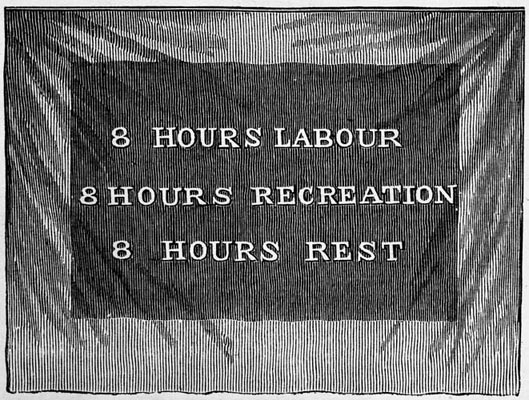
Spread out over a 24-hour day, his time management program looks like this:

o 8 hours a day for sleep and rest
o 8 hours a day for work at your profession (but as your success grows, work less than 8 hours)
o 8 “particularly precious” hours “devoted to things you wish to do, not have to do.”

Hill’s suggestions for the final 8 hours include: “play, social life, reading, writing, playing a musical instrument, tending a garden, or just sitting and watching the clouds or the stars.” You can add to that, quality time with the family, prayer, exercise, cooking, sex, or whatever activity makes you happy.

Hill firmly believed that all business could be taken care of within an 8-hour time frame, and that the key to success was to consistently take advantage of the “8 precious hours”. He amplifies this point by stating: “Do not let a day go by without taking some time for yourself — some time you spend in pure pleasure, as you see it.”

The bottom line is this: sure, we all need to make money. But in the year ahead, let’s have a plan in place to reward and take care of ourselves. After all, success is measured by more than the money in our bank accounts. It’s also measured by the richness of our lives.

This post is by Tom Rapsas and originally appeared on the blog Loyalty Truth, January 10, 2011. You can reach Tom at tomrapsas@gmail.com

Friday, January 14, 2011

You've Got Apped!...The ROIs of Social Commerce

Gone are the days customers when were incentivized for making purchases! Foursquare, Shopkick and a host of other players have armed mobile touting customers with rewards for checking into stores, scanning barcodes, posting reviews and just spreading the word.

As commerce got enriched with 'e-commerce', it has been taken into another orbit with social commerce! Driving the top end of the customer funnel for driving customer walk ins was usually the task for the media planning department, spraying the countryside with hoardings and television advertisements. Converting walk ins / check ins to transactions was the beleaguered task of marketing number crunchers doling out billions of coupons and referral incentives to hapless customers.

The new social apps have now taken over this end of the funnel and boldly incentivize customers for merely pressing 'check in' buttons on their mobiles. The difference of course lies in the fact that customers can check into multiple stores of their choice! So…is their loyalty to their thumbs or to the stores!...Well, that's a tough one. Let's come back to this on another post.

So…what drives customers to check in? The social urge to tell their friends where they are, where they've been and where they're going?! Sure..but this post is about the other end of the equation pointing towards the retailers and service providers seeking to sell their wares.

Though the Starbucks - Foursquare promotion has been touted as a breakthrough model, a quantum explosion of such cloned offers is bound to result in a declining response trend. The challenge for conventional marketing and loyalty practitioners has been to invest and experiment in this new gamble called 'social marketing'

Facebook and a host of networking sites have been flooded with company pages, offer sites, fashion communities and a wide vocabulary of social concoctions that would make a teetotaler head for tequila shots!

The rough road to social marketing nirvana has essentially moved forward on gut feeling and boards seeking to position themselves as 'web' savvy and hip. Not sufficient fuel for significant, scalable and committed efforts in the long run. The question that has been posed behind closed quarters..

"What's the ROI folks?"

A nightmare for any model that attempts to break away from the now sanctum sanctorum of click rates and response rates.

Eventbrite, offers a web based service to publish events and sells tickets using social marketing techniques. It has conducted analytics on it's several campaigns and has come out with the following findings (excerpts below)

  • Sharing equals transactions: Dollars per share When someone shares an event with their friends through social media, this action results in real dollars. Our most recent data shows that over the past 12 weeks, one share on Facebook equals $2.52, a share on Twitter equals $0.43, a share on LinkedIn equals $0.90, and a share through our "email friends" application equals $2.34. On an aggregate level across Facebook, Twitter and LinkedIn, and our email share tool, each share equals $1.78 in ticket sales. We're seeing this number improve every week with the most recent four-week average equaling $1.87.
  • It's extremely sticky: Visits per share The hyper-relevancy of the social graph breeds deeper engagement, greater sales and stickier audiences. For Eventbrite, Facebook is now the #1 referring site for traffic to the company's site, surpassing Google as people discover events that their friends are sharing and they click through to find out more. On average each Facebook share drives 11 visits back to Eventbrite.com. Averaging across all channels, one share drives over 7 visits back to Eventbrite.com.
  • It's happening everywhere, across all sizes and types of events: Consistency of sharing
    Sharing is consistent across event size. Sharing occurs at the same rate an event has 10 or 10,000 people. Classes/workshops and networking events have the most share activity, followed by fundraisers, conferences, and music events

Now, for those who may find this to be quite geeky, in a nutshell their findings appear to indicate that social marketing works and there is a potential ROI measurement that can be garnered from these exercises.

So, where does this fit in with the loyalty theme in this blog…… Marketing & loyalty teams appear to have a historical fixation on incentivizing economic transactions and few have ventured into the territory of recognizing and incentivizing 'social' transactions.

Perhaps the time has come! (now that you can satisfy the number crunchers approving your budgets!)

Wednesday, January 5, 2011

Mi lista de deseos para el 2011!

I wouldn't normally consider the Spanish language to be in my comfort zone, but I thought of entering this often cliched and dejavu experience of making predictions, wishlists and defining trending patterns on a different note. So...here goes!...truly hoping the readers more conversant with the English language relate with some of the aspects covered below more than the title!

1. The 800 pound gorilla : With ARPUs (average revenue per user) under severe pressure in mobile telephony, look forward to Mobile Operators (MOs) initiating relevant engagement initiatives for their subscriber bases. Though location based offerings, including Foursquare, have made inroads, there is a significant scope for MOs to create loyalty/engagement programmes leveraging their customer transactional insights, distribution reach, locational capabilities and sheer scale!

2. 360 degrees : Marketeers will focus more on the pan-channel / touch point experiences for their customers in driving customer engagement. So, more of back to basics, rolling up sleeves kind of initiatives, ensuring that the messaging, experience, feedback mechanisms and personalization dimensions are all kicking in. This in itself should offer a significant boost to customer loyalty.

3. Talk to Me! : The holy grail of consumer marketing...1 to 1 engagement. Personalized programmes, bespoke experiences, segmented offerings are clearly the order of the day. 'Dear Customer' communication should rightfully disappear into museums and Internet archives!. High end luxury and financial institutions are well placed to take great leaps in this direction...but will they surprise us this year?!

4. Source of Customer v/s Source of Value : This is a jargon that I've been doling out for several years now. There are some brands that have a great source of quality customer and even data about them (which is quite different from understanding them). There are other brands, whose business lines with higher margin structures allow them offer greater incentives to their customer transactions. It's time that brands realize this challenge and opportunity and leverage mutual resources. These may be termed as coalitions or partnerships, but we need to several more of these around, hopefully offering greater value and relevance to customers. Look forward to seeing more mobile operators working with retail or restaurant chains in creating a segmented engagement programme!

5. Convergence Standards: Emerging technologies and systems offering convergence of multiple loyalty and payment cards into a single device or plastic address a clear need of wallet simplification! Is there a light at the end of this tunnel? Is there an opportunity for unrelated brands to work together on a single card, without it being a coalition loyalty programme? Smart card based solutions have been implemented in Turkey and the Middle east by banks, as examples of course. Can we see more?

6. It's just not the Transaction! :
Economic decision making is 70% emotional and 30% rational! The transaction is not the beginning and end of the loyalty journey, as has been stated and quoted for time immemorial. Brands would need to start incentivizing good behaviour such as 'advocacy' to truly engage their customers. Points for referrals are again quite clearly and proportionately linked to end transactions. It needs to go beyond and appeal to the emotional side of their customers as well. Makes for a challenging business case, but critical in times to come to differentiate!

7. Coalitions are in! : Though conceptually well designed and executed coalition programmes offer significant consumer value, few have attained scale and profitability. With cost pressures increasing and an evidently clear need for delivering a greater impact to customers, brands may find it more appealing to directly participate in coalition programmes than be overtaken by third party aggregators and service providers in engaging their customer sets. The game lies in leveraging consumer insights to drive transactions which should overcome fears of losing customers and walletshare to competing brands. The battlefield is not in the coalition programme. The larger battlefield is in the consumers mind!

8. Greed is Good and so is Redemption : Mr. Gecko has propounded the former. We need to believe in the latter. Let there be game changers in the industry that incentivize redemption. The key question to be answered. If you don't want redemption...don't give out zillion points. Invest the money elsewhere.

9. It's just not about the Consumer : Employee and channel partner engagement are equally if not more important than the consumer engagement programmes! Look forward to seeing a higher salience of budgets towards these streams.

10. Instancy : The differentiator is going to lie in recognizing behavioral & transactional trends and having a framework that offers dynamic and instant value / gratification experiences to the consumer. A thank you email 33 days after my flight is not going to cut ice. A point statement once a month cannot be the only method of information dissemination. A birthday offer 17 days prior to my birthday may not be a standard industry practice to be adopted across product groups. A 100 point birthday incentive may just not excite the customer. The trick would be in getting a fine blend between proactive and reactive mechanism. The mobile and Internet channels have made the delivery channels ubiquitous across brands and consumers. The ball now lies in our court!

Would look forward to your views and lists!

Saturday, January 1, 2011

Low Price Brands and Loyalty?

Should a low cost airline have a loyalty programme?
Should a budget retailer offer loyalty points?
Should a brand assuring no frills service and honest value for money fritter away rewards?

An often quoted stand, in quite passageways of course is.... what would our customers think of us if we start doling out reward points? Would we be sending out the right message? Would they start thinking that we can in fact offer them greater discounts? Wouldn't they prefer that they receive an upfront cash discount instead of some fancy points?

Some perspectives..
1. You are in the business of making profits and your customers know that! So...don't be shy!
2. My customer is price sensitive!..He switches for purchase decision for a few cents!...Undoubtedly, and she would remain so. It's how you play it when the playing field is at par
3. Too much liability!...A liability is created when you don't use the asset.
4. Too expensive!.....This is a matter of execution. It's as risky or expensive as above the line advertising. It's how you can measure the impact and correlate it back to the topline and perhaps even bottomline.

The case for loyalty for brands operating in the low cost consumer domain is possibly as difficult as for other brands.

It's the quest for excellence and the undying passion for capturing market-share that would possibly lead these brands on the journey to better understanding their customers, and hence their loyalty journey.

Your views?

Tuesday, December 28, 2010

It must be the holidays. My inbox is stuffed like a turkey.


Over the years, my wife and I have signed up to receive e-mails from quite a few retailers. The list includes: Solutions, Ann Taylor, Eddie Bauer, Land’s End, Sephora, Bath & Body Works, Williams-Sonoma, Victoria’s Secret, Wine Library, Crate and Barrel, Gap, Old Navy, Wine.com, Pottery Barn and The Discovery Store.

It wasn’t hard to pull the preceding list of retailers together—all I had to do was open my inbox. It represents just some of the companies that have sent me e-mail pitches in the past 24 hours. The other day I woke up to a record 76 e-mails, fully 90% of which were promotional in nature.

Stacks of gifts under $25, Last Chance for Free Shipping! and 20% off all items read a few of the subject lines. After a while, they all begin to blur together, the electronic equivalent of shouting carnival barkers on the midway or white noise.

Now, I realize the holidays are here, and these stores are desperate to make their numbers for the year. But I wonder about the sheer velocity at which many of these retailers are blasting out e-mails. Virtually every retailer I’ve mentioned is sending out a promotional message a day, some two a day.

My main point of contention with this e-mail deluge though, is the non-personalized nature of the communications. You see, my wife and I have done business with all of the companies I mentioned, some several times over the past year. But judging by the content of the e-mails, you’d never know it. I’m quite certain I’m getting blasted with the same messages as the other 10,000 or 100,000 people on their e-mail lists.

There’s a better way to communicate with me as a customer, especially a customer who has a relationship with you. Here’s what I believe these companies should be doing:

* Send me personalized content.
I should be receiving a least some content based on my purchase history. If the wine merchant knows I have a penchant for red Zinfandel, send me e-mails about red Zin. Look at my past buying behavior so you have some idea of what I’ll be shopping for in the future.

*Ask me how much e-mail I want.
Give me the choice of how frequently I receive e-mails from you. Maybe I want to hear from you every day—or maybe I only want to hear from you once a week or once a month. Engage with me when I want you to, and I may not tune you out.

*Surprise and delight me.
Offer me something different than the other guys. Give me free gift wrapping. Present an old item in a new way. Try less selling, and more telling. For most of us, a good story works better than a hard sell.

The bottom line is if retailers want to prevent me from clicking on the opt out button, they need to do a better job of engaging with me. Remind me why I did business with you in the first place, and why I should do business with you again.

A final note: Happy New Year to all!

This post is by Tom Rapsas and originally appeared on the blog Loyalty Truth, December 21, 2010. You can reach Tom at tomrapsas@gmail.com

Wednesday, November 10, 2010

I’m not a car guy. So why does Pep Boys want me in their loyalty program?


So I was standing in line at my local Pep Boys auto parts store the other day. Not that I’m a car guy. I usually pay my trusty neighborhood mechanic Larry to do everything car-related. But the wife needed some new windshield wipers, and I figured this was something I could handle.

Anyway, the guy in front of me in line was buying a roof rack and the cashier asked him if he was in the Pep Boys rewards program. My quick read: this guy wasn’t a car guy either, just a guy going on vacation. His response, as expected, was “no”.

Figuring the cashier would just move on, or hand him a “take one”, she instead asked him for a bunch of personal info on the spot—name, address, phone #, e-mail address —handed him a membership pamphlet and viola, he was enrolled in the program.

I’m next up in line and she goes through the same routine:

“Are you in the Pep Boys rewards program?”

“No.”

“Can I have your name…addresss…telephone number…”

There was no asking me if I wanted to join the program, which I didn’t—I mean I go into an auto parts store about once a year at best. There was also no concern that with only one cashier on duty, the line behind me was now a good five-deep.

The Pep Boys program? Well, it seems okay, with some nice added benefits like free flat repair and discount towing. But I could quibble. The program is a straight cash back rewards program with funding at a fair but flat 5% for all customers. Pep Boys might consider:

• A mix of rewards, so the program isn’t all about the money

• A tiered approach that offers incremental rewards when I hit a specific spend level

• Special bonuses and perks for its very best customers

• A program that does more than enroll customers, but engages with them


My biggest concern is the auto-enroll aspect of the program, whereby you’re enrolled whether you want to be in the program or not. The long-term effect of auto-enrollment is detrimental. Because I didn’t raise my hand to join, the chances of my actual participation are greatly diminished. And ultimately, when the program participation numbers come in, it won’t reflect well on the results.

As you might have surmised, I’m a prime example of a customer who should not have been auto-enrolled. Loyalty program or not, I may never set foot into a Pep Boys again. You see, those windshield wipers I bought—they’re still sitting in the trunk of my car. They need a special adapter to be installed, and I’d just as soon have Larry the mechanic do it. Like I said, I’m not a car guy.

This post is by Tom Rapsas and originally appeared on the blog Loyalty Truth, November 2, 2010. You can reach Tom at tomrapsas@gmail.com

Wednesday, September 29, 2010

Where’s my free shot of Tequila?


As faithful Loyalty Redefined readers know, my recreational drink of choice is beer. But every once in a while, my wife and I will entertain friends over a pitcher of Margaritas on the rocks. (Salt, please.)

Many years ago a friend who knows about these things told me the best tequila for the money was Sauza Gold. Looks and tastes just like Jose Cuervo Gold—my friend says better—for a couple of bucks cheaper.

So a few weeks ago, with my supply of Sauza Gold running low, I picked up a bottle at my friendly neighborhood liquor store. Hanging from the bottle’s neck was a promo tag pitching a $2.50 refund if I filled out the form and mailed in my receipt.

Now for me, a $2.50 rebate is right at the threshold of “is this really worth my time and a 40 cent stamp?”, but I eventually mailed it in. I figured the $2.50 minus postage was the equivalent of a healthy tequila shot—so why not take Sauza up on their generous offer of a free drink?

Only I didn’t get a rebate check. Just a postcard letting me know I wouldn’t be getting a rebate because I used a PO Box as my home address—which I have to do, as my quaint little town has no home mail delivery.

The postcard listed a rewards Web site where I could check on my refund, but after entering my name and address into an online form, I got a message back saying they couldn’t identify me. I looked for another way to contact them—but there was none.

Next stop: the Sauza Web site, where there are some nice drink recipes—but again, no link or mention of how to contact anyone at the company. Unless I want to “friend” Sauza at Facebook, which is an additional step I didn’t want to take.

So here lies my conundrum: My relationship with Sauza has always been a simple one. I give them $20 and change, they give me a quality bottle of tequila in return. I would have been happy continuing this relationship for years to come.

Only, they just blew it. Through a promotional campaign that obviously had some bugs in the execution, they found a way to offer me bad customer service—when customer service didn’t even have to be part of the equation.

Suaza: as far as I’m concerned, you shouldn’t have run this promo in the first place, because the bottle of Jose Cuervo Gold sitting next to you on the shelf suddenly got more appealing. But there’s still time for you to make amends.

Like all good companies these days, you should have an ear to the social networking ground listening for chatter about your brand. Sauza, are you listening?

This post is by Tom Rapsas and originally appeared on the blog Loyalty Truth, September 24, 2010. You can reach Tom at tomrapsas@gmail.com

Thursday, September 16, 2010

Discover Says They’re #1 in Loyalty. Does Anyone Care?


I saw a TV commercial for the Discover credit card the other day and they made a claim that caught my eye. It was one of those “we’re #1” declarations, in this case: We’re “#1 in customer loyalty”.

The claim was not explained during the commercial and it got me wondering: to a consumer, what does being #1 in customer loyalty really mean? Is there a benefit, implied or otherwise?

Now I’ve worked in loyalty marketing for several years, and don’t think of myself as jaded—but my initial reaction to the claim was, “who cares?” It actually got me wondering if Discover was #1 in loyalty because they had retained a lot of long-time cardholders with monstrous balances who couldn’t switch cards during these tight financial times.

So I did a little research on the Discover corporate Web site and found some substance behind the #1 claim. There it said that: “Discover Card ranked #1 in customer loyalty among leading credit card brands according to the 2010 Brand Keys Customer Loyalty Engagement Index Report.”

Okay, as a loyalty insider I know a little about Brand Keys. But what does this mean to a consumer? I did a little more digging on the Brand Keys site and read they measured loyalty over several categories with a “combination of proprietary psychological assessments and higher-level statistical analyses, allowing us to statistically fuse the “emotional” values with the “rational” attributes that identify the bond that exists between brand and consumer.”

Hmmm, I was still scratching my head. It didn’t appear to be anything that could remotely be translated into consumer-friendly language. Which got me questioning why the claim was made in the first place.

Customer loyalty is an end result, a desired outcome of the great product and service you offer. So rather than tell me your customers are loyal, tell me why they’re loyal—amazing customer service, lower fees, a unique add-on benefit—and how this will benefit me.

Sure, being #1 in customer loyalty sounds nice, and we do know that Discover puts a happy face on lots of consumers, but these days most people don’t want to hear corporate chest bumping—they want a brand that delivers tangible benefits, with each and every transaction.

This blog post originally appeared on Loyalty Truth, Setember 08, 2010, via creative director/writer Tom Rapsas.

Tuesday, August 10, 2010

The USPS – Death Spiral of an Industry?


Suppose you had a business whose sales had dropped 13% over the past year, continuing a multi-year sales decline. You’d probably look for ways to run your business more efficiently by cutting expenses. You might even consider reducing your prices to attract more business.

Well if you’re the United States Postal Service (USPS), you have a different take on what to do about a double-digit decline in revenue: you decide to raise your rates to make up for lost income, in some cases dramatically.

According to BtoB Magazine, in early-July the USPS requested that standard-mail letter rates, the kind used most often for commercial direct mail campaigns, be increased 5%. The USPS also asked that standard-mail parcel rates, used to send small-size merchandise and product samples, be raised a whopping 23.3%.

Raising prices to make up for decreasing sales? Is that any way to run a business?

Mail volume is dwindling because consumers are increasingly using electronic communications as alternatives to postal deliveries. That’s an undeniable fact. The proof: from 2007 through 2009, the volume of mail handled by the USPS fell by 36 billion pieces, a 17% decline and the greatest drop in its history.

This year, the USPS is on track to lose a stunning $6.5 billion. Yet, instead of doing something to manage expenses, the Affordable Mail Alliance reports that in 2009 the USPS managed to reduce labor costs by a mere single percentage point, 1%.

I have long been a proponent of direct mail, believing it best to give consumers a choice of communications vehicles. We’ve also seen studies showing that most people still prefer snail mail over e-mail, viewing it as a welcome respite from their clogged inboxes. But this latest plea for another price increase begs the question: At what point does it become cost prohibitive to use a communications medium whose delivery costs can run up to 100 times more than that of its electronic competitors?

I hate to say it, but maybe it’s time to consider eliminating mail—and the USPS—from the marketing mix.

What do you think?

This post originally appeared on Loyalty Truth, July 26, 2010, and is by Tom Rapsas. You can follow Tom on Twitter: @TomRapsas

Wednesday, July 14, 2010

Dogfish Head: Smart Marketing on Beer Money.


Suppose you’re a local craft brewery, without the marketing resources of a Coors, Miller or Sam Adams. You don’t have money in the budget for national TV commercials—or any TV spots for that matter. So how do you get the word out about your award-winning brews?

If you’re Delaware-based Dogfish Head, you make the most of your marketing dollars—by leveraging the Web and social media to help spread the word and turn casual customers into loyal fans.

Now if you’ve ever had a bottle of any type of Dogfish Head, you’ll know that this is one company that knows what they’re doing when it comes to making beer. Dogfish Head brews are consistently tasty, distinctive and often complex in flavor, with notes that are more akin to a fine wine than a beer.

So it probably comes as no surprise that these passionate brew masters have brought the same level of passion and flair to their brand marketing efforts. A few highlights that set the brand apart:

A robust Web experience—at the Dogfish site, you can read about the latest Dogfish Head releases as well as happenings at the brewery and company restaurant. What’s important here is the sheer depth of the content. Each brew—and there are lots of them—has it own page, with the story behind the beer, tasting notes and even food pairing recommendations.

An active presence on Facebook and Twitter—the key to success on both of these social sites is to keep the material fresh and interact with those who reach out to you. Dogfish Head does both and has over 55,000 Facebook followers and 18,000-plus on Twitter, impressive for a microbrew.

Its own video-rich YouTube channel—most of the videos feature founder Sam Calagione with a behind the scenes look at the brewing ingredients and process. Sam is personable, has a good camera presence and his commitment to his craft comes through loud and clear.

A community of fans—what better way to develop brand advocates than to develop a place where they can congregate and interact. At the site’s community forum, members can pontificate on issues ranging from music to home brewing to, of course, Dogfish Head’s latest releases.

On a personal note: my favorite Dogfish Head beers are the delicious 60-minute IPA, or when I’m in the mood for a more intense “sipping” beer, the raisin-infused Raison D’ Etre.

Cheers!

This blog originally appeared on Loyalty Truth on July 1, 2010, and is by Tom Rapsas. Tom can be reached via Twitter @TomRapsas

Monday, June 21, 2010

How To Revitalize An Aging Brand. (The Return of the Hoodoo Gurus.)


I’ve been a fan of the Australian rock band the Hoodoo Gurus since the 1980’s, when they were college radio favorites with hits like Bittersweet, Come Anytime and What’s My Scene. The group’s sound has been described as everything from power pop to garage punk to surf rock, and has aged well—at least if you consult the number of plays the Gurus get on my iPod.

The band has been under the radar in the US for a decade or more—but a few weeks ago, the Gurus put out their first new music release in several years. Titled Purity of Essence, it’s better than anything they’ve done since their heyday—a tuneful, hard rocking set that I’ll be playing loud on my way to the beach this summer. (Recommended download: I Hope You’re Happy.)

The good vibes got me thinking: How do you revitalize and market an aging brand? In this case, how would you bring to life an aging rock band that has been out of sight & out of mind for years? Should the brand image be repackaged for a younger market? Can it be done without putting a lot of money behind the effort?

Here’s my quick take on what the Hoodoo Gurus, or any mature brand, can do to make a go of it in today’s market.

*Capitalize on name recognition – Is a rebranding needed? Not here, as the Gurus name has enough cache to bring back happy memories to fans of a certain age. In rock and roll, nostalgia still rules, as evidenced by the fact geezer bands from Rush to Crosby Stills & Nash are still successfully touring. By comparison, the Gurus, now in their late-40’s, are relatively young.

*Revitalize the product – The group could have rested on past laurels with a “greatest hits” release, but instead has opted for a brand refresh—a new CD that puts a fresh new spin on their sound. This increases the chance of winning new fans as well as rekindling the interest of older ones.

*Connect with thought leaders – While the new release has received good reviews from mostly obscure music blogs (save a glowing review in allmusic.com), they need to connect with the leaders in the space. This includes Rolling Stone and Pitchfork, and of course the leading rock radio outlets including XM and Sirius. Push, push, push, to get the new CD reviewed—and played—wherever possible.

*Use social media to get the word out – Social media represents the best way to reconnect with a now scattered fan base. While the band has set up Facebook and MySpace pages, it looks like there could be more interaction from band members, especially regarding fan posts that reference old videos and shows. Make the conversation a dialogue, not just a monologue.

*Take the show on the road – There’s nothing like a live product demonstration, especially when it comes to rock-and-roll. So I recommend the Gurus dust off their passports and hit the road for a tour. If they’re anywhere near Philly or NYC, you’ll find me not far from the stage.

This post originally appeared on Loyalty Truth on June 11, 2010, and is by Tom Rapsas, a seasoned Creative Director and Loyalty Marketing guru. You can follow him on Twitter here: @TomRapsas

Tuesday, June 1, 2010

Virgin Atlantic Goes The Extra Mile


I just signed up for the Virgin Atlantic loyalty program called the Flying Club. I have no immediate plans to fly on the airline. Nor do I really need another frequent flyer card, as I’ve got miles banked in three or four programs now.

The reason I joined the club is I just finished reading Business Stripped Bare, Adventures of a Global Entrepreneur, the new book by Virgin-owner Richard Branson. I’ve come away impressed with Branson’s business acumen, his marketing skills, as well as his infectious joie de vivre.

I mean here’s a guy who started in the record business and has since branched out into mobile phones via Virgin Mobile, financial services, health clubs, bio-fuel, stem cell research, health-care and even space travel with Virgin Galactic. His brand, and passion for business, truly knows no boundaries.

But, getting back to Virgin Atlantic, what might be most impressive is how he has keyed into the customer experience as the crucial element of continued loyalty. Sure, Virgin has a traditional air miles program, but Branson identified several areas he believed would offer a better onboard experience, and delivered on them.

These features, some since copied by competitors, include:

*The ability to order food from your seat on-demand, according to your schedule, not the flight attendant

*A vast choice of music and movie options, delivered to a personal entertainment screen at your seat

*Seat-to-seat chatting with friends, colleagues or the attractive woman in 9B, via an entertainment screen keyboard

*Custom designed “soothing” lighting and comfy seats

It’s a reminder that true customer loyalty is never achieved by points programs and perks alone—you also need to deliver a superior customer experience. It’s something Branson strives for across all his business lines, and has me hoping I can find an excuse to fly Virgin Atlantic soon.

This post was written by Tom Rapsas and originally appeared on the blog Loyalty Truth, May 24, 2010.